Pillar guide
AI-Native App Platform: An Ontology You Run
People search for an AI-native app platform and mean a place where AI-written business software can land and stay governable. ObjectStack’s answer is not a page builder with a chat box. It is one executable business ontology — objects and fields, relations, actions, permissions, flows, and agent and tool definitions — and the open runtime that runs it; the screens are projections of that definition, not the product.
An executable business ontology is the definition of a business that a runtime runs. AI writes it as typed metadata in your repository; the ObjectStack runtime derives the database, REST API, screens, and MCP tools from it and enforces permissions and audit on every call; agents operate it under the same permissions as people; and you own the files, Apache-2.0. ObjectOS runs the same loop hosted or self-managed, with in-app AI, approvals, and operations on top.
Why it matters now
- Anyone can make an AI generate an app now; the bottleneck moved to reviewing, governing, and trusting what the AI wrote.
- Generated apps need permissions, audit trails, and lifecycle control after the first version ships — rules a runtime enforces, not rules a prompt remembers.
- A business keeps changing its rules, integrations, and operating model; a definition an agent can hold whole stays changeable, a generated codebase does not.
What the platform needs
- Executable: objects and fields, relations, actions, permissions, flows, and agent and tool definitions as typed metadata the runtime validates and runs — validated, not reasoned over.
- AI-writable: a coding agent writes the definition; Strict TypeScript, Zod schemas, and os validate reject what would fail at runtime; a person reviews a small diff instead of generated glue.
- Agent-operable: every object and exposed action doubles as a governed MCP tool, called under the signed-in user’s permissions, approvals, and audit.
- You own it: the definition lives in your repository under Apache-2.0, and a database you already run federates in place — read-only by default, and early.
Use cases
Turn a repair, service, approval, or internal operations requirement into a running application your agent writes and your team reviews.
Replace fragile low-code prototypes with an ontology the runtime governs and an agent can refactor whole.
Expose business objects to AI agents without handing them direct database or administrator access.
Reading path
Related articles
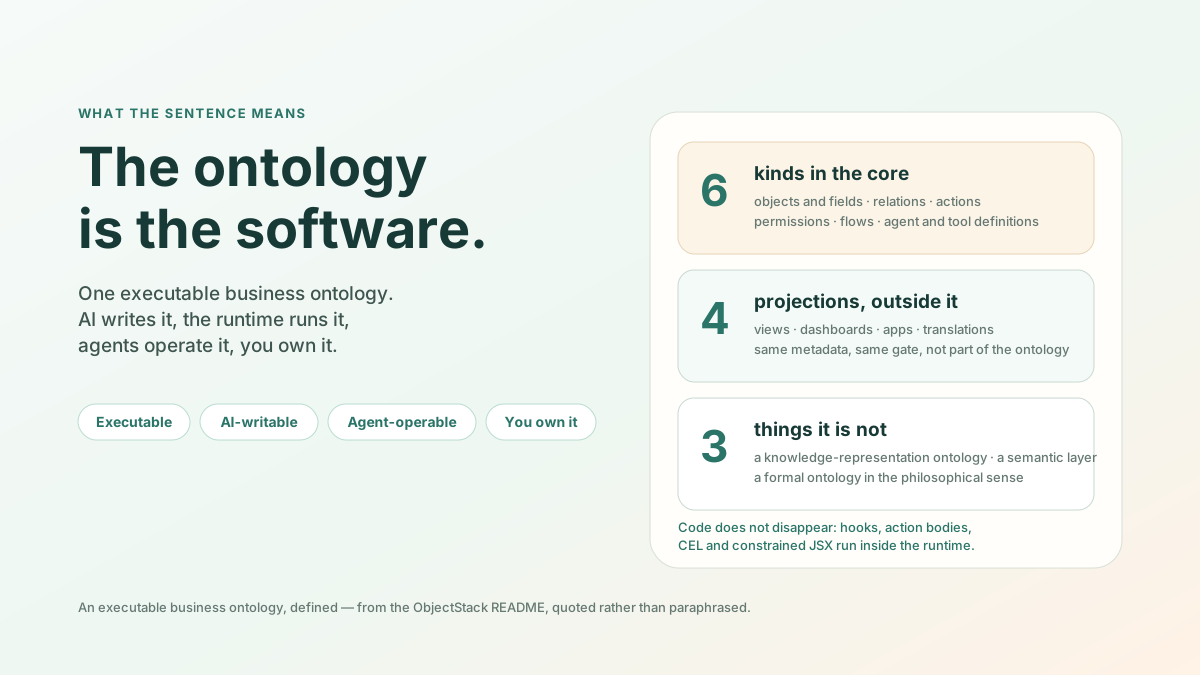
What Does "The Ontology Is the Software" Mean? An Executable Business Ontology, Defined
The line is ObjectStack's positioning; this is its definition. An executable business ontology has a six-kind core, four projections and three things it is not — and a test for telling core from projection.
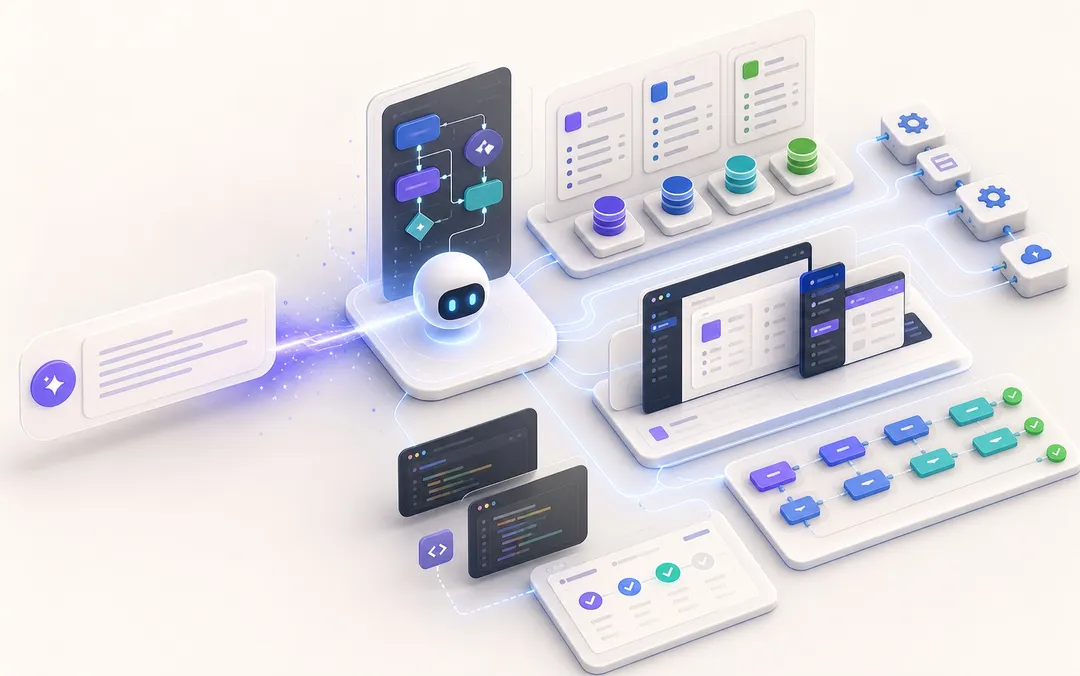
From Requirement to Running App: How AI Generates Reviewable Metadata
A concrete equipment repair scenario shows how AI Builder turns one request into objects, fields, relationships, views, permissions, actions, workflows, APIs, and agent tools.

Low-Code vs. AI-Native App Platforms: Where Complex Business Breaks
Low-code helps teams build pages and workflows faster, but complex business systems depend on objects, permissions, integrations, change control, and maintainability.
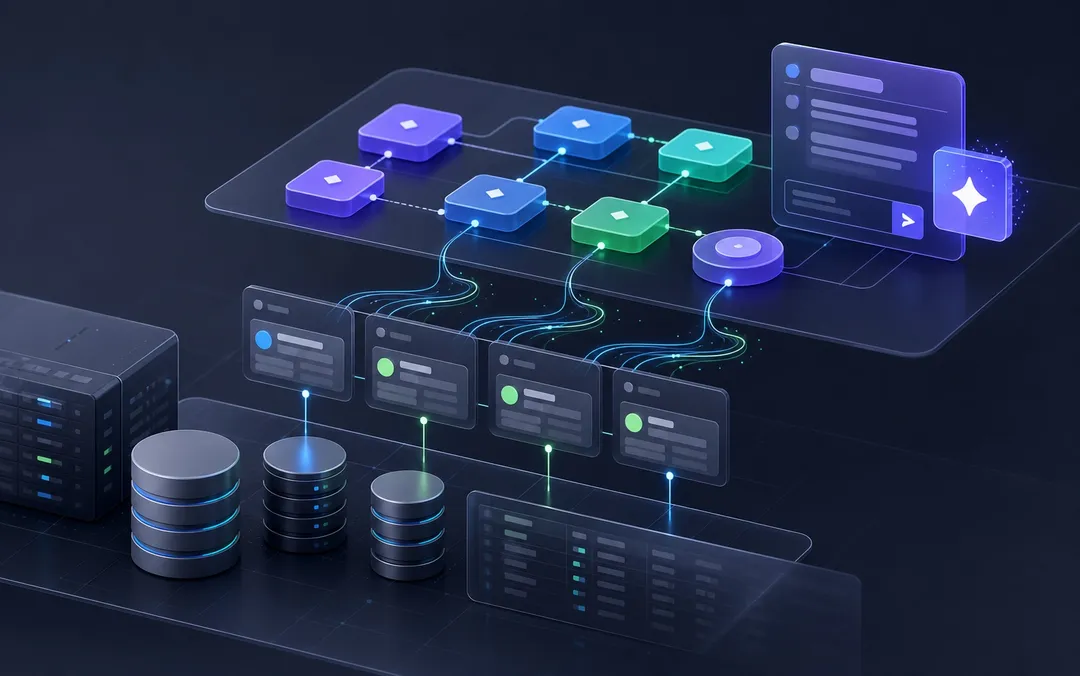
Add AI to Existing Systems Without Migration: Connect Your Database
On self-managed ObjectOS (Enterprise), connect the database you already run — read-only by default — let a coding agent model its tables as objects, and put AI on real data under your permissions, system of record untouched.
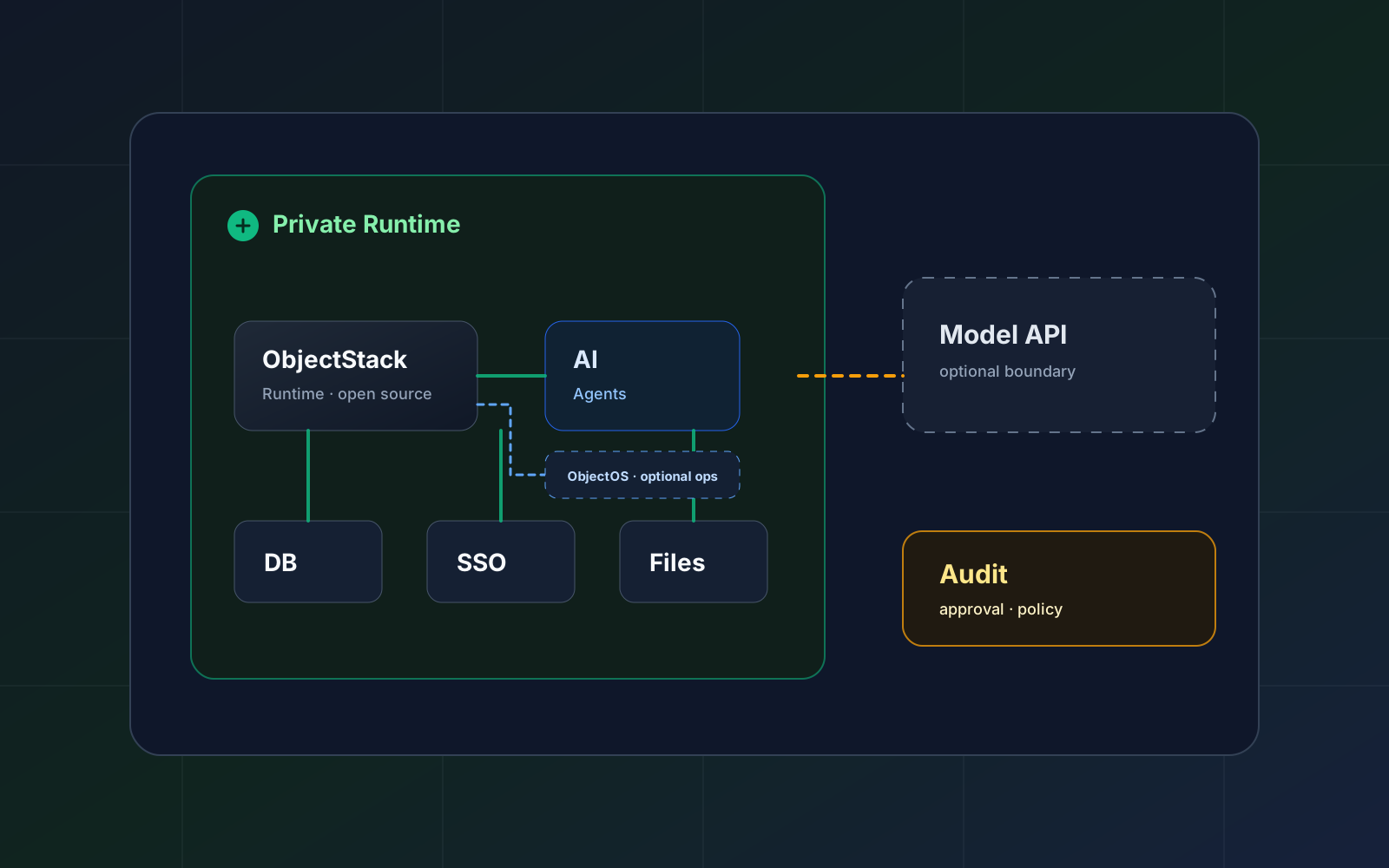
Self-Hosted AI Application Platforms: Why the Runtime Belongs to You
Once AI reads business data, triggers workflows, generates applications, and calls tools, enterprises need control over the runtime that governs objects, permissions, tools, approvals, and audit evidence.
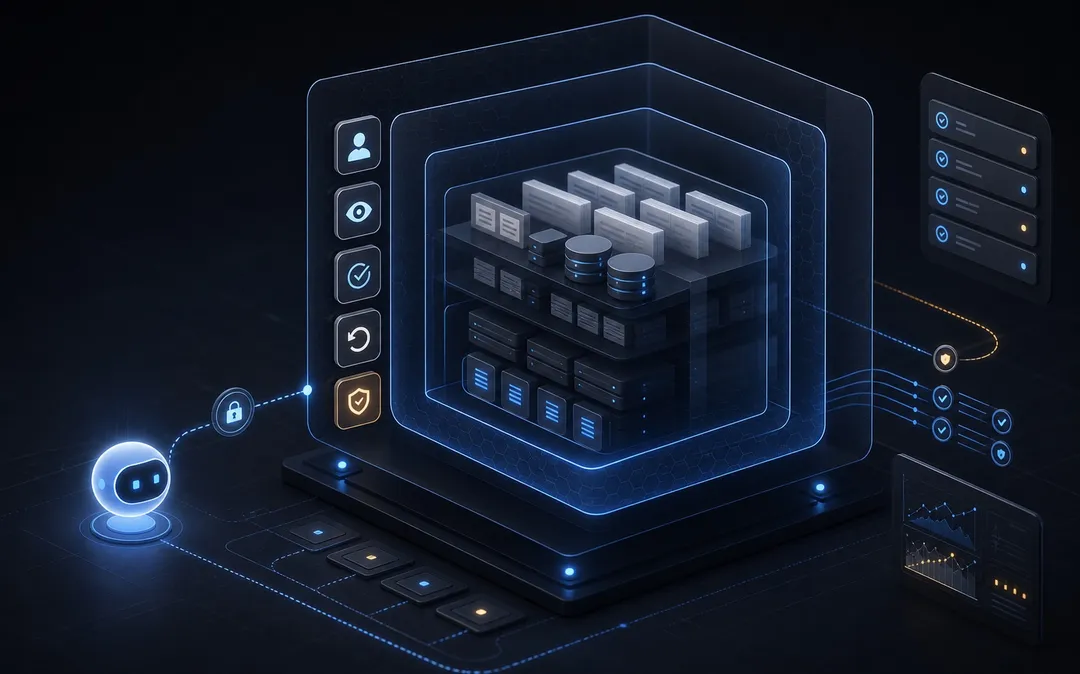
How AI Agents Stay Inside Enterprise Permission Boundaries
Enterprise teams do not need AI agents to become unrestricted administrators. They need agents that act as controlled users, inherit permissions, route risky actions for approval, and leave an audit trail.
Explore the cluster
FAQ
What is an AI-native app platform?
In ObjectStack’s terms, an executable business ontology plus the runtime that runs it: the business is defined once — objects and fields, relations, actions, permissions, flows, and agent and tool definitions — AI writes that definition, the runtime derives and enforces everything else, agents operate it, and you own it. Views, dashboards, apps, and translations are projections of the ontology, not part of it.
How is it different from low-code?
Low-code platforms are the closest relatives: metadata generates tables, APIs, and UI there too. The difference is where the definition lives and who it is written for. Low-code keeps metadata as configuration in the vendor’s database, edited through its UI by a person; ObjectStack keeps it as typed, declarative TypeScript in your repository — versioned and reviewed as a diff, checked by os validate before it runs, and shaped for an AI to write.
Where does the code go?
Code does not disappear; it moves into the runtime. Hooks, action bodies, CEL expressions, and constrained JSX run inside the same permission and audit fence as everything derived from the ontology. What goes away is the generated codebase a definition would otherwise have to describe — and that no agent could hold whole.